Our Building
Located at the foothills of Mount Lycabettus in the neighbourhood of Neapoli, the two-story building of SeaPort Art Center for Curatorial Research was restored to accommodate the Curator’s Program and SeaPort’s public activities.
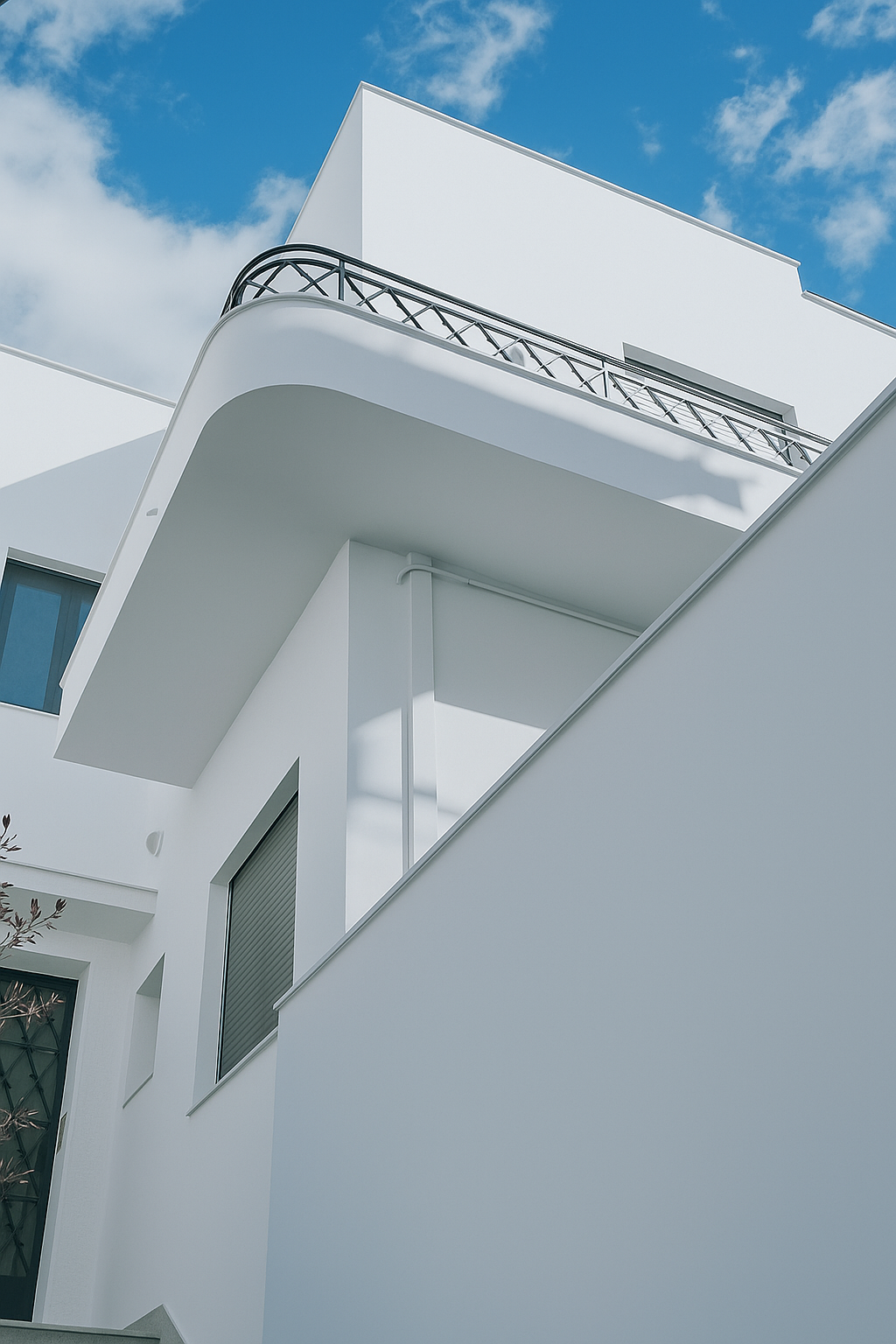
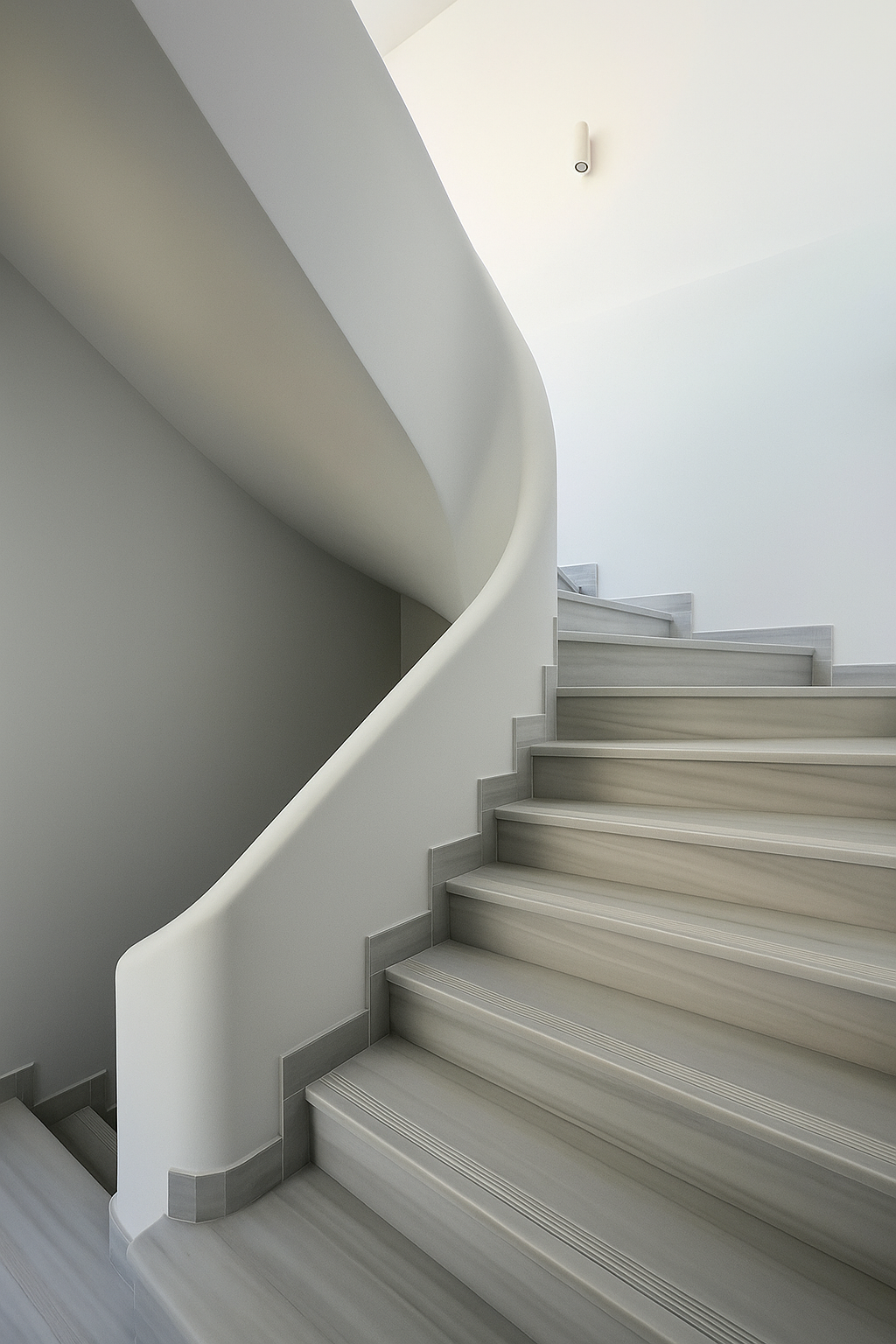
Built in 1952, the building belongs to a period of reconstruction and rapid urban transformation in Athens, when new materials and modernist influences were reshaping the city’s architectural landscape. Its renovation, undertaken by the architectural office ARID, preserved original features including the marble staircase, terrazzo floors, and the ironwork of the balconies and entrance gate.
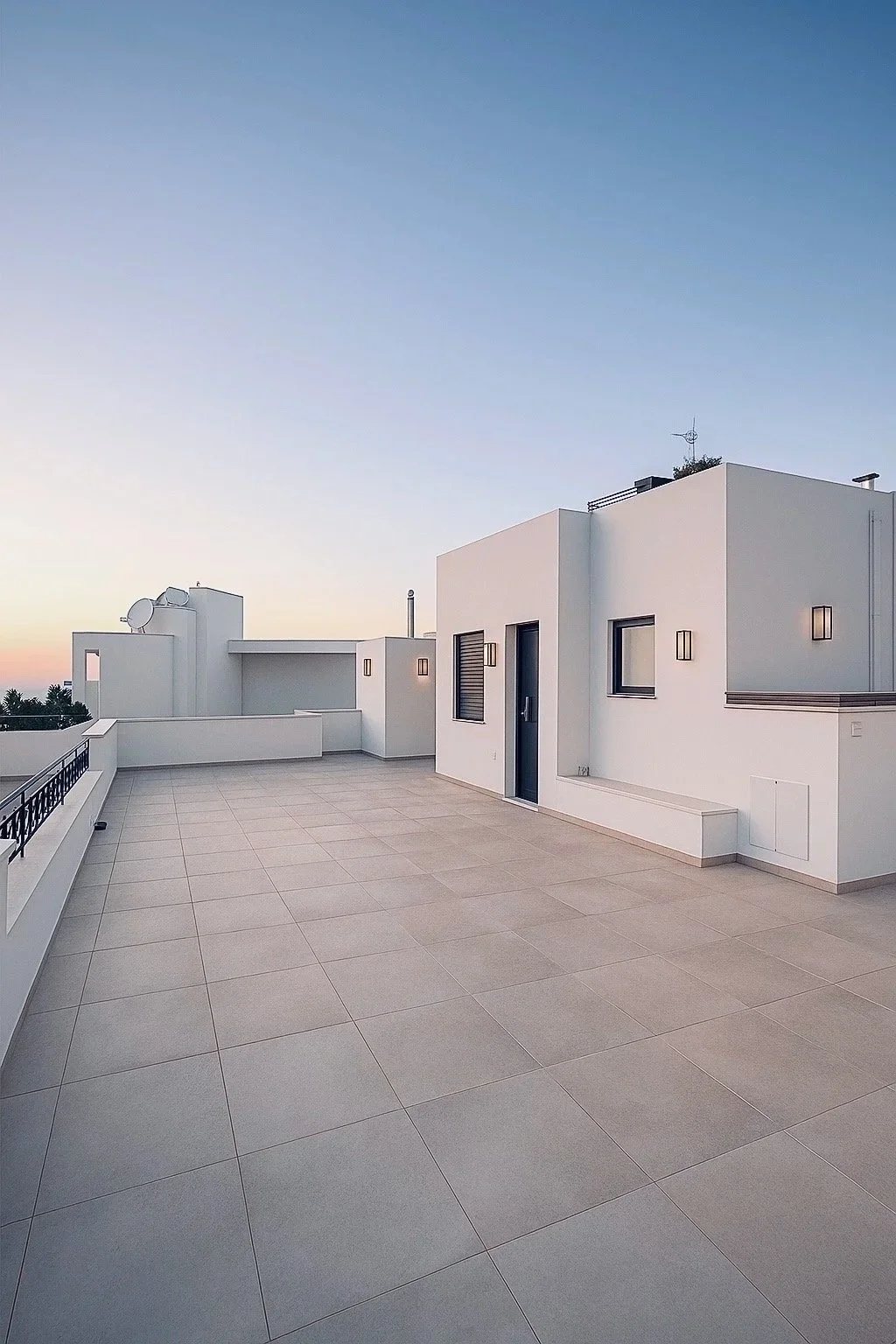
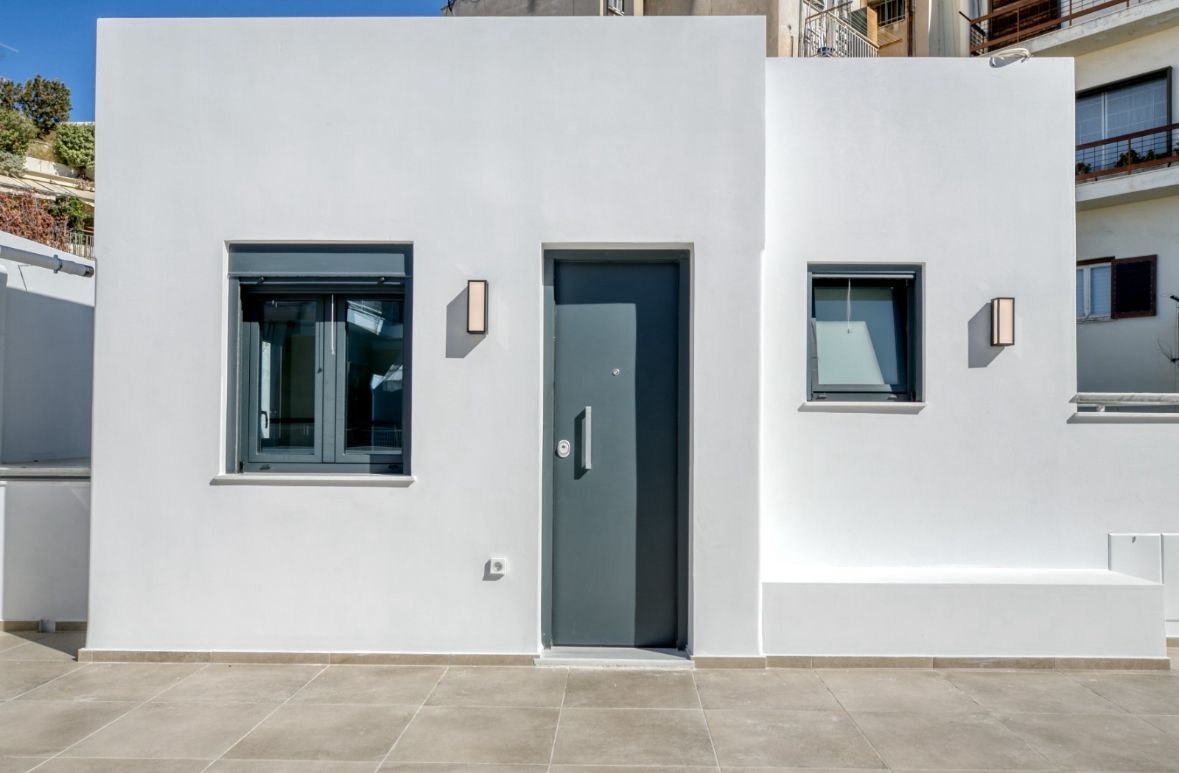
The ground floor serves as a flexible space for exhibitions, screenings, lectures, conversations, workshops, and other public events. Its terracotta-toned floor draws on the colour palette of the period in which the building was constructed. The upper floor accommodates resident curators in a light-filled apartment that retains its original flooring and opens onto a large terrace used for gatherings and public programs. Together, these spaces allow residence, research, hospitality, and public exchange to take place within the same building.
Mount Lycabettus is one of Athens’ most recognizable natural and cultural landmarks. According to classical mythology, the hill was formed when the goddess Athena dropped a rock she was carrying toward the Acropolis. Its name has been associated with several origins, most commonly with the ancient presence of wolves on the hill. Rising above the center of Athens, Lycabettus offers a vantage point from which the city’s geography and successive transformations can be read.
At its base, Neapoli, meaning “New City,” developed during the 19th century as Athens expanded beyond its earlier urban boundaries. Its proximity to the university and the center of the city made it historically associated with students, writers, artists, and intellectual life. SeaPort’s location within this neighbourhood places the Center within a part of Athens shaped by the relationship between domestic life, cultural activity, and the changing fabric of the city.